

Metro Mobility Launches Equity-Focused E-Bike Share Program in Lowell
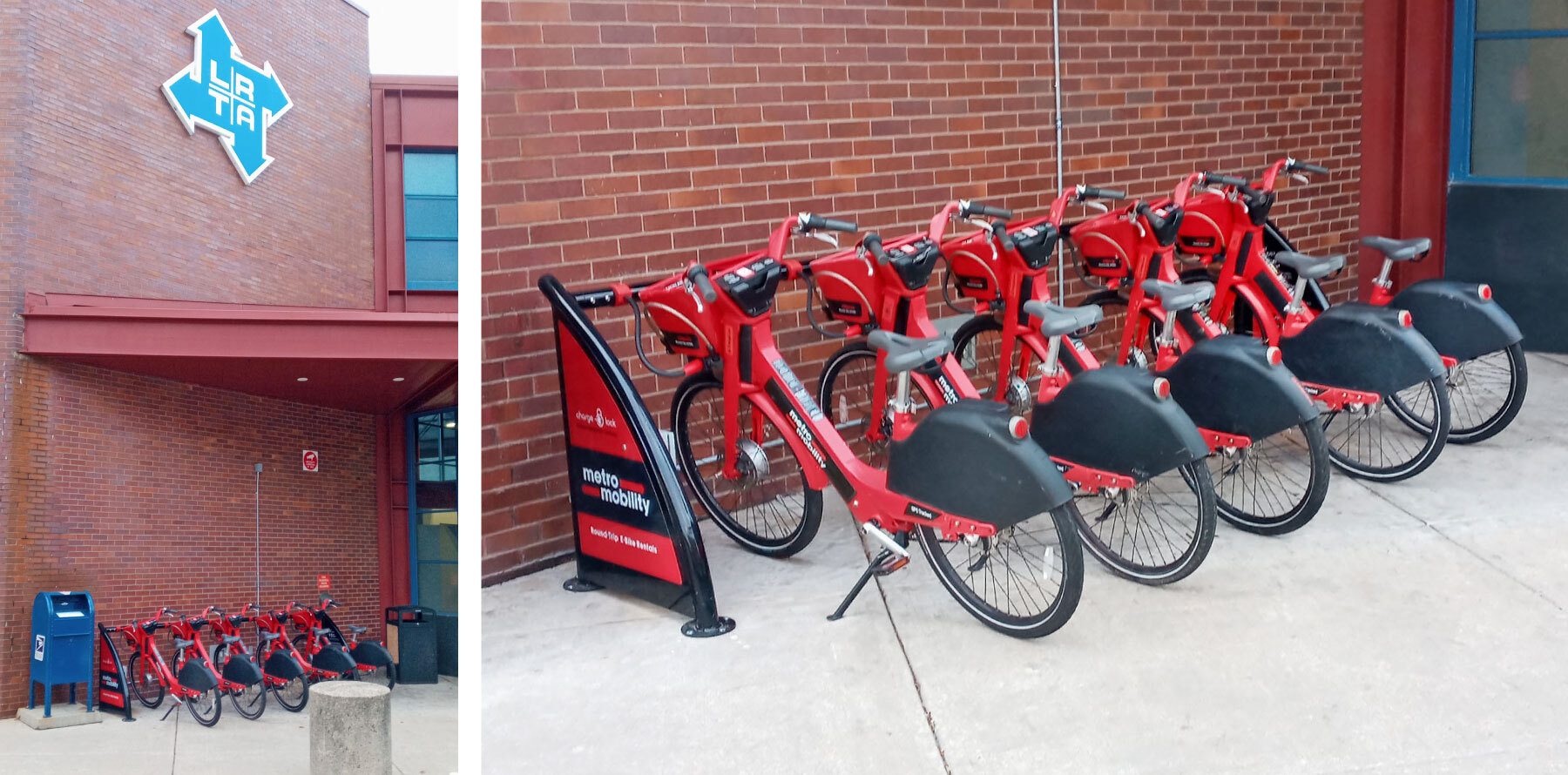
E-bike transit hub at LRTA Bus Hub offers first-mile/last-mile connections to buses and commuter rail, with $1/day rentals for income-qualified users
Metro Mobility, a Cambridge, MA-based mobility startup, in collaboration with the Lowell Regional Transit Authority (LRTA), has launched a low-cost self-serve e-bike rental program in Lowell designed to improve equitable access to clean transportation.
The program's first e-bike rental station is now open at the LRTA bus hub, the Robert B. Kennedy Bus Transfer Center on Thorndike Street in Lowell, creating a multimodal hub where riders can seamlessly connect between transit and e-bikes. Located at the city's central bus terminal and adjacent to the MBTA Commuter Rail station, the site offers a strategic first-mile/last-mile connection for transit riders traveling to destinations throughout Lowell and the surrounding region.
The project is made possible through grant funding from the Massachusetts Clean Energy Center's (MassCEC) Accelerating Clean Transportation for All Round 2 (ACT4All 2) program, which supports equity-focused transportation initiatives that increase clean transportation access and decrease transportation burdens to improve mobility access in underserved communities while reducing transportation emissions.
"MassCEC's ACT4All program was designed to ensure that the transition to clean transportation reaches every community. Metro Mobility's e-bike program in Lowell is exactly the kind of community-centered solution we had in mind: affordable, practical, and deeply connected to the transit networks that residents already rely on," said MassCEC Senior Program Director Rachel Ackerman. "We're proud to support this work and look forward to seeing how it strengthens options for Lowell's residents while reducing pollution across the region."
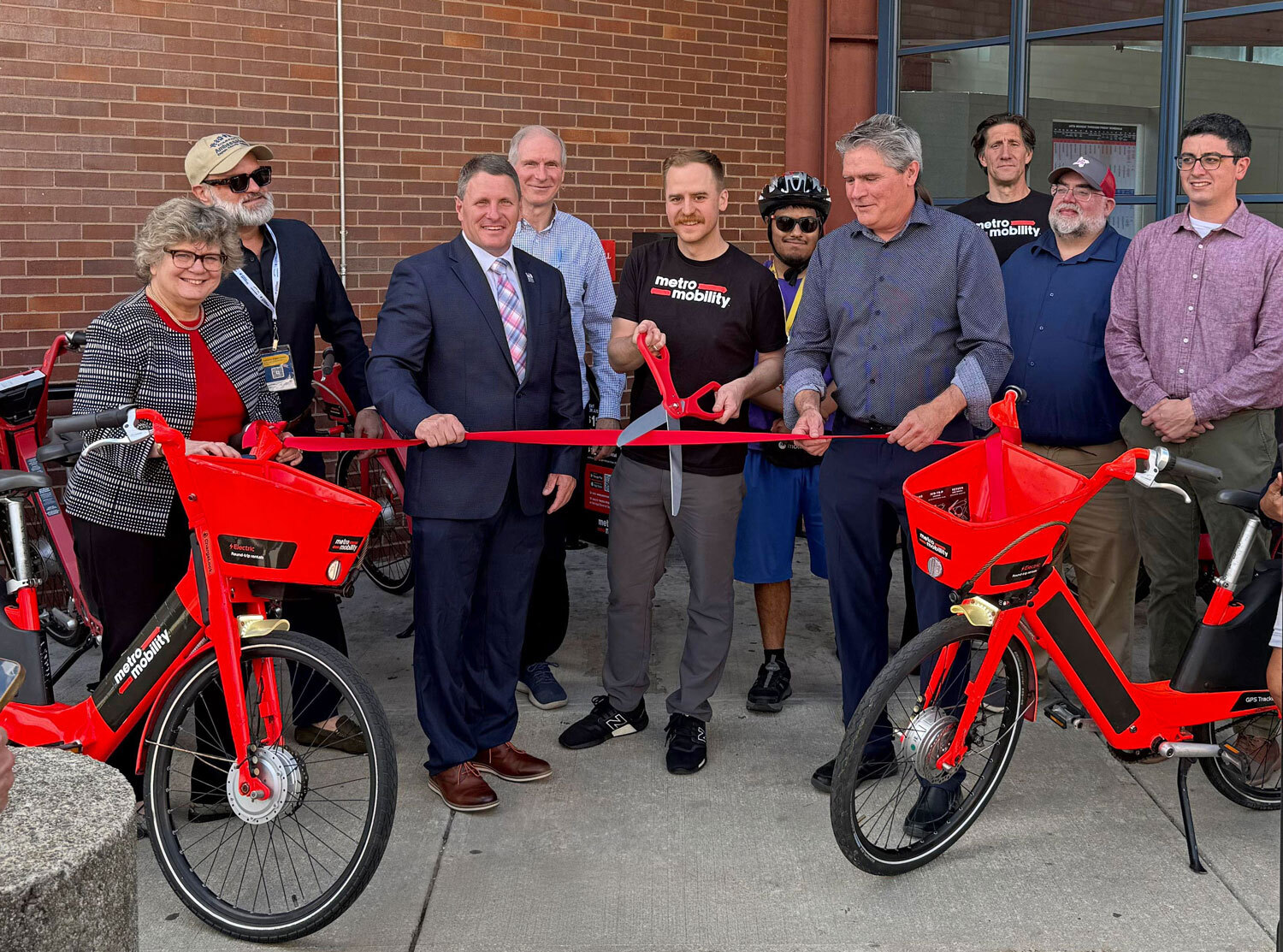
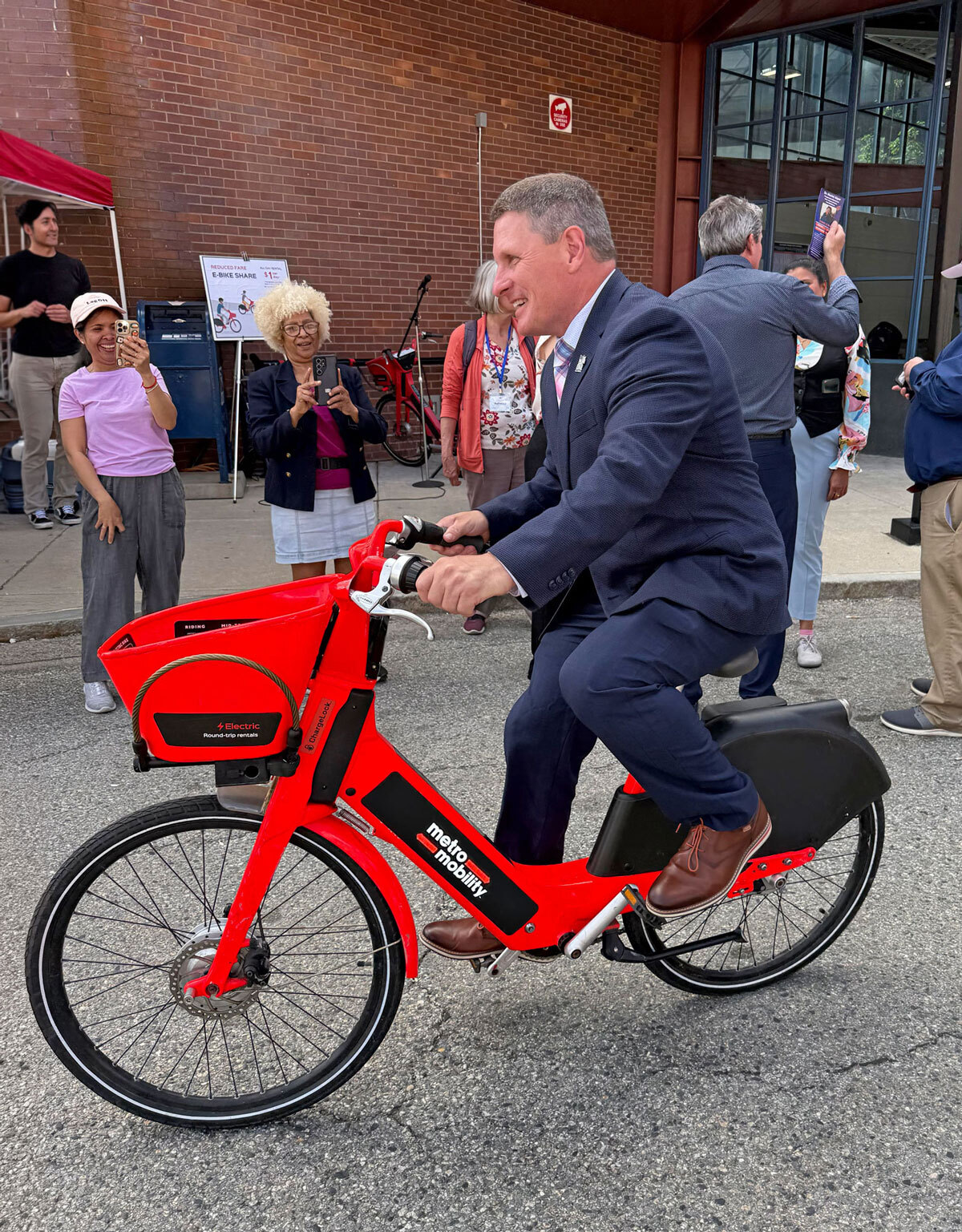
To commemorate the launch of the program, Metro Mobility and the Lowell Regional Transit Authority hosted a ribbon-cutting event on May 28, 2026, at the station. The event was attended by Lowell Mayor Erik Gitschier, LRTA Administrator Dave Bradley, members of the Lowell City Council, community-based organizations, and residents who gathered to celebrate the introduction of affordable, sustainable transportation options in Lowell.
Mayor Erik Gitschier added, "This program aligns closely with the goals outlined in Lowell Forward and reflects the kind of innovative partnership that will help shape Lowell's future. By making it easier for residents to connect to transit and travel throughout the city, these e-bikes can help reduce traffic congestion, parking demand, and emissions while expanding access to affordable transportation. We are proud to support this effort and look forward to seeing additional locations added across Lowell in the future."
A second e-bike station is planned as part of the Lowell deployment under the pilot project, further expanding access to affordable micromobility and strengthening connections between transit and key destinations in the city.
The self-serve e-bike rentals are powered by Metro Mobility's patented ChargeLock® stations, IoT and GPS-enabled e-bikes, and proprietary rental software. Unlike traditional bikeshare systems, Metro Mobility's e-bikes are designed for affordable all-day or overnight rentals and can be locked to any bike rack or pole while rented, enabling riders to travel beyond fixed docking locations and complete trips to virtually any destination.
ChargeLock stations use a durable, flexible braided steel cable that both locks and charges the e-bikes simultaneously, creating a simple and intuitive user experience while dramatically reducing infrastructure costs compared to traditional docking stations. Users simply plug in the cable to end their rental, secure the e-bike, and begin charging.
The program is specifically designed to expand affordable transportation access for low-income residents, who often face disproportionately high transportation costs and limited mobility options. Income-qualified users can access discounted all-day e-bike rentals for just $1, making clean transportation a practical and affordable option for commuting, errands, and transit connections.
"Lowell is an ideal city for equitable micromobility because of its strong transit network and dense urban neighborhoods," said Ryan Walas, CMO, Metro Mobility. "By colocating this first station at Lowell's primary transit hub, we're making it easier for residents to combine transit and e-bikes for practical everyday transportation while ensuring affordability remains central to the program."
Throughout the pilot, Metro Mobility will collect program data including trip mileage, transportation mode replacement, and transit connections to evaluate the program's impact on transportation access and measure emissions reductions. The project will help demonstrate how regional transit authorities can integrate micromobility into their systems in a cost-effective and equitable way.
Metro Mobility currently operates shared e-bike programs in communities across Massachusetts and provides its ChargeLock technology and software to other micromobility operators seeking affordable alternatives to traditional docking infrastructure.
About Metro Mobility
Metro Mobility is a leading innovator in the micromobility industry, dedicated to developing solutions that enhance urban transportation while prioritizing sustainability and user experience. Based in Cambridge, MA, Metro Mobility is at the forefront of the movement to create a more efficient and environmentally friendly future for cities around the world. For more information, please visit www.metromobility.io.
About Mass Clean Energy Center
The Mass Clean Energy Center is a state economic development agency dedicated to accelerating the growth of the clean energy and climatetech sector across the Commonwealth to spur job creation, deliver statewide environmental benefits, increase affordability, and secure long-term economic opportunities for the people of Massachusetts. Since 2010, MassCEC has awarded $990 million in programs and investments and attracted $3 billion in private and public funds.
Contact:
Ryan Walas
Metro Mobility, LLC
+1-617-491-7200 x202
[email protected]